Event 1
Alex Stafford rejects Sarah
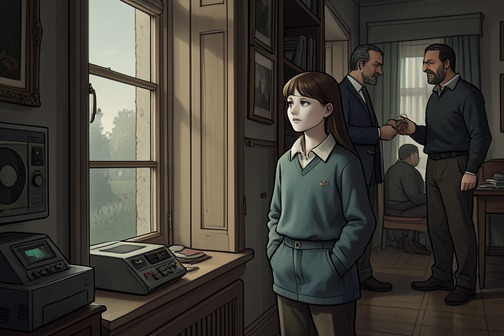
[Alex Stafford](entity:character-recall-character-alex-stafford-b937b0d19ace)’s rejection of Sarah is the first defining rupture in her family life: he denies responsibility for his daughter and blames [Mae](entity:character-recall-character-mae-e423ed3a5cad) for having her, while Sarah—overhearing the adults—comes to believe that her birth has made her mother unhappy. The rejection begins a pattern of abandonment that shapes her grief, self-understanding, and later distrust of attachment.
## The rejection
Before Sarah understands what her parents are saying, she imagines being welcomed by her father. She hopes he might lift her onto his shoulders or take her riding, and waits quietly near the open parlor window so she can hear when he wants her to return. Instead, she hears Mae plead with Alex to acknowledge their daughter, describing Sarah as lively, charming, and unmistakably his. Alex answers that he already has legitimate children with his wife and did not want another. He says Sarah should never have been born and faults Mae for refusing his wishes.
The argument also reveals that Alex had urged Mae to end the pregnancy. Mae says she could not do so because she understood it as killing her unborn child and a mortal sin. Alex dismisses her religious conviction and argues that following his advice would have prevented their present difficulties. His rejection is therefore not simply an absence from Sarah’s life: it is a deliberate refusal of her existence, accompanied by blame directed at the mother who chose to have her.
## What Sarah makes of it
Sarah hears enough to grasp that Alex does not want her. Her excitement collapses as the conversation continues, and the imagined welcome gives way to the conviction that her existence has caused harm. Later, when Mae is distressed after Alex leaves, Sarah concludes that it is all her fault. She stops calling him Papa and associates his departure with her mother’s sadness and inattention. Mae’s reported remark that love is a curse further darkens Sarah’s early understanding of attachment.
That self-blame persists beyond the immediate scene. When Mae dies, Sarah thinks that her mother would have been alive and happy if Sarah had never been born. The belief converts Alex’s rejection into a lasting explanation for loss: Sarah does not merely experience herself as unwanted by her father, but imagines herself as the cause of her mother’s suffering and death.
## Long-term consequences
As a child, Sarah responds to mockery about her mother by concealing her hurt behind coldness and disdain. In adulthood, she describes the family history to [Michael Hosea](entity:character-recall-character-michael-hosea-4fe314cd3a46) and repeats the conclusion that she should never have been born and that her life began as a mistake. Her account connects Alex’s rejection to a wider history of abandonment and exploitation, but the original wound remains visible in the way she interprets herself as unwanted and burdensome.
The rejection also echoes in Sarah’s later decisions about marriage and children. When she believes she cannot have children, she tells [Miriam Altman](entity:character-recall-character-miriam-altman-e9ae39938493) that she does not belong with Michael and leaves, reasoning that he deserves a family. She asks Miriam to love him and give him the children she believes she cannot. This later choice is not the same event as Alex’s rejection, but it reverses its direction: Sarah, once made to feel that her birth was a mistake, tries to remove herself from a relationship for what she believes is another person’s good. The childhood scene thus anchors the novel’s continuing pattern of love entangled with rejection, sacrifice, and Sarah’s damaged sense of her own worth.
Event 2
Sarah Abandoned at Four Winds
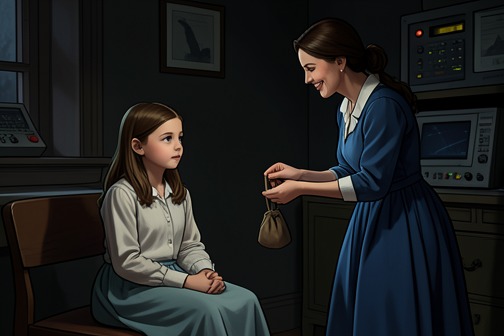
Sarah’s abandonment at [Four Winds](entity:location-recall-location-four-winds-e7396c70f5a7) begins with her father’s rejection and becomes, in her understanding, proof that she is unwanted by both parents. [Mae](entity:character-recall-character-mae-e423ed3a5cad) sends her away with [Cleo](entity:character-recall-character-cleo-bbd2520849a1) as [Alex Stafford](entity:character-recall-character-alex-stafford-b937b0d19ace) is expected to return; left waiting through the night, Sarah is again made to bear the consequences of adult choices. The episode establishes a defining pattern in her childhood: rejection becomes self-blame, and separation becomes an expectation that later shadows her life as [Angel](entity:character-recall-character-angel-b4ecd11d5f8e).
## Causes and Background
Alex Stafford refuses to accept Sarah as his daughter, insisting that he already has legitimate children and had never wanted another. Mae’s efforts to defend Sarah’s place in his life do not change his position. Sarah absorbs the rejection as evidence that her birth has made her mother unhappy, rather than as a failure of the adults responsible for her.
When Alex is expected to return, Mae presents Cleo’s offer to take Sarah to the seashore as an exciting outing. Sarah understands the arrangement differently: she believes her mother is sending her away to keep her out of Alex’s way. She protests that she wants to stay with Mae, but Mae presses the plan, speaking brightly of the ocean and the trip. Sarah reads her mother’s renewed animation as a response to Alex’s expected visit, and the apparent promise of a holiday becomes a feared separation.
## What Happens at Four Winds
The separation leaves Sarah waiting for Cleo to return. Minutes pass, then hours, and she curls up in a blanket against the wall. The narrative connects this wait to an earlier occasion when she had also waited for Mae after Alex came, making the new abandonment echo a familiar absence rather than an isolated mishap.
Cleo has forgotten Sarah and left her in a dark corridor overnight. In the morning, she finds the child still there and realizes the seriousness of her neglect. Instead of taking responsibility, Cleo tells Sarah not to tell Mae and blames her for not coming inside. Sarah says that Merrick had told her not to move until Cleo fetched her; frightened by Cleo’s anger, she apologizes and pleads that Cleo not tell Merrick, who had threatened her.
## Consequences and Aftermath
The episode reinforces Sarah’s belief that she is the cause of other people’s unhappiness. After Alex’s rejection, she already thinks that her birth has made Mae miserable; being sent away appears to confirm that she is unwanted. That conviction returns when Mae becomes ill and dies while Sarah is eight. Sarah imagines that Mae would have been happy and alive if Sarah had never been born, turning childhood rejection into a lasting explanation for loss.
The abandonment belongs to a larger sequence of failed care. After Mae’s death, Sarah is left with [Rab](entity:character-recall-character-rab-1eed0d979385), who later tells her that this is the end before handing her over. As an adult, remembering her childhood, Angel describes how the past is repeatedly forced back into consciousness and then pushed away in favor of emotional numbness. The Four Winds episode therefore functions not only as a separation but as an early instance of the abandonment and self-blame that shape her later distrust and sense of identity.
Event 3
Mae Rejected at Home and Moves to New York with Sarah
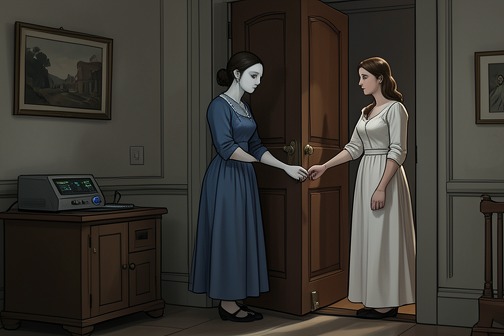
[Mae](entity:character-recall-character-mae-e423ed3a5cad)’s return to her parents’ home ends in rejection, not reconciliation: her father declares her dead to him, and she leaves with Sarah. The family rupture forces the two into a precarious life sustained by selling treasured possessions and moving from lodging to lodging, while giving Sarah an early lesson in abandonment that reverberates through her later relationships.
## The return and rejection
At the door, Mae’s mother recognizes her and is overcome with tears. Mae pleads to come home, but her mother warns that the situation is not simple. She lets [Mae and Sarah](entity:relation-recall-relation-mae-and-sarah-6a9e7742149f) inside and asks them to wait while she speaks with Mae’s father. As Mae paces and silently prays, her mother returns with a white, tear-streaked face and says no.
Mae insists on confronting him, offering to beg and admit that he was right. Her mother tries to stop her, explaining that he considers his daughter dead. Mae answers that she is not dead and hurries after her mother, leaving Sarah behind in the room. When she returns, her face is pale and her manner dull; she tells Sarah they are leaving. Her mother presses money into her hand, the only help she can offer. Mae gives a broken laugh, takes Sarah’s hand, and walks away in tears.
## Poverty and displacement
The money and possessions provide only temporary shelter. Mae sells her ruby ring and pearls, and she and Sarah stay at an inn until the proceeds run out. She then sells her music box, allowing them to live more comfortably for a time in an inexpensive boardinghouse. Later, she asks Sarah to return the crystal swan; the money from its sale supports them for a longer stretch in a rundown hotel.
Eventually Mae finds a more lasting place for them in a shack near [New York](entity:location-recall-location-new-york-f84f7f10ee10)’s docks. Sarah sees the sea there for the first time. Though garbage floats in it, she likes the water, the salt air, the ships arriving with cargo, and the sound of waves against the wharf’s pillars. The scene sets Sarah’s attraction to the harbor beside the poverty that has carried them there: even a compromised refuge can offer something she values.
## Consequences for Sarah
The rejection is more than a lost home. Sarah witnesses her mother’s appeal, the blunt refusal, and the departure that follows; in the aftermath, security depends on exhausting a small store of money and selling objects one by one. The move to New York therefore begins a pattern in which survival is uncertain and belonging can be withdrawn by those with power over it.
Later, as an adult known as [Angel](entity:character-recall-character-angel-b4ecd11d5f8e), Sarah approaches forgiveness through work and self-punishment. Remembering that Mae was never forgiven despite saying countless Hail Marys and Our Fathers, she cannot understand how a single word could absolve her. She responds by seeking more chores and treating labor as penance, even as that effort creates distance rather than closeness. The childhood scene of her mother pleading for acceptance thus becomes part of the emotional history behind Angel’s difficulty receiving grace.
Event 4
Mae's Death Leaves Sarah an Orphan
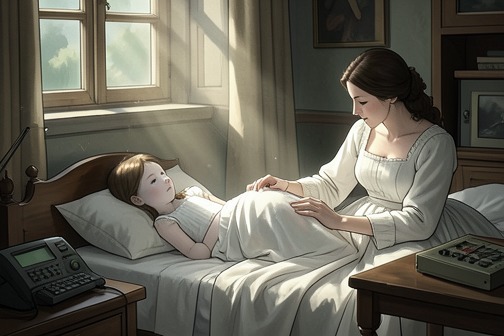
[Mae](entity:character-recall-character-mae-e423ed3a5cad)’s death leaves eight-year-old Sarah without her mother and becomes a defining rupture in her childhood: Sarah interprets Mae’s suffering and death as proof that she herself should never have been born, a conviction that later hardens into emotional withdrawal and mistrust.
## Causes and Background
Mae’s death follows years of hardship. [Alex Stafford](entity:character-recall-character-alex-stafford-b937b0d19ace) had refused to acknowledge Sarah as his daughter, insisting that he already had legitimate children and had never wanted another. Sarah absorbed the rejection as personal blame, believing her birth had made her mother unhappy. After Alex left, Mae’s grief and illness further shaped the child’s sense that love brought pain rather than security.
In the winter Sarah was eight, Mae became ill but refused to see a doctor, saying she needed only rest. Her breathing grew increasingly labored. Before she died, she asked [Rab](entity:character-recall-character-rab-1eed0d979385) to take care of Sarah, smiling as she had in the past.
## Death and Sarah’s Grief
Mae died in the morning, with the first sunlight of spring on her face and her rosary clasped in her hands. Rab wept; Sarah initially felt too burdened to cry. She lay beside her mother and tried to warm her, then pleaded for Mae to wake. At last Sarah wept until exhaustion overtook her.
When men came to prepare Mae’s body, Sarah screamed at them to leave her alone. Seeing Mae wrapped in a sheet and the shroud sewn over her face, she fell silent. The men spoke as though she were not there. One gave her Mae’s rosary, and Sarah sat holding the beads while the men carried her mother away.
Sarah understood Mae’s death through the language of freedom, but turned that idea against herself: she imagined her mother free of her, and reasoned that without Sarah, Mae might have lived happily in a cottage in the country. When Rab failed to return that night, Sarah went to the docks and threw the rosary into a garbage scow, crying out at the heavens and receiving no answer.
## Aftermath and Lasting Significance
The loss leaves Sarah alone and uncertain whether Rab will keep his promise. In the days that follow, she tries to care for him when he returns drunk, covering him with a blanket and telling herself that she will find a way to look after him. The reversal places a child in the role of caretaker even as she remains without dependable protection.
Years later, Sarah—now known as [Angel](entity:character-recall-character-angel-b4ecd11d5f8e)—recalls her mother’s death and the circumstances that followed: Mae had become a prostitute, and Rab drank away the money. Angel remembers Mae dying with a smile and repeats the belief that her own birth was a terrible mistake. She then reveals that Rab sold her to a brothel. The childhood loss therefore stands not as an isolated bereavement but as the beginning of a sequence of abandonment and exploitation, and as a wound Angel has continued to interpret through self-blame.
Event 5
Rab Hands Sarah Over to Duke
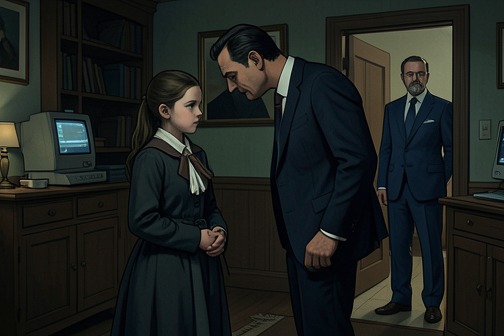
[Rab](entity:character-recall-character-rab-1eed0d979385)’s handover of Sarah to [Duke](entity:character-recall-character-duke-3caca367e857) is the decisive betrayal at the center of her childhood trauma: an arrangement presented as adoption becomes the beginning of Duke’s control and abuse. The scene turns Rab’s promise to [Mae](entity:character-recall-character-mae-e423ed3a5cad) into its opposite, leaving Sarah exposed to exploitation and giving the name [Angel](entity:character-recall-character-angel-b4ecd11d5f8e) its painful origin.
## A promise turned into a transaction
After Mae’s death, Rab is consumed by guilt and insists that he must keep his promise to care for her daughter. With no money and little to offer Sarah, he seeks help from acquaintances. One man arrives at the shack and says he works for someone who wants to adopt a girl. He examines Sarah, comments on her appearance, and gives Rab two bills, instructing him to clean her up, buy decent clothes, and bring her to an address. Rab celebrates the prospect as good news for Sarah, believing—or allowing himself to believe—that this is a path to a better life.
The exchange makes Sarah’s vulnerability plain. She does not understand what Rab has arranged and does not trust the stranger, but Rab holds her in place while the man inspects her. The language of adoption masks a transaction in which Sarah’s appearance is assessed and money changes hands. Rab’s stated duty to Mae does not protect her; it becomes the justification under which he delivers her to danger.
## Duke takes control
At the meeting place, Rab drinks while Sarah waits for her father to return. A man’s voice asks whether Rab is enjoying his brandy. Sarah realizes that the visitor is not the father she expected. Duke is present, and Rab’s flattering conversation does not prevent Duke from signaling to another man. Rab is strangled while Sarah watches; she runs for the door, but cannot escape before she is seized and restrained.
Afterward, Duke washes the paint from Sarah’s face and tells her that Rab was not her father. He declares that she will be called Angel, then takes her to the bed and says he has things to teach her. The imposed name marks the beginning of his authority over her identity as well as her circumstances. By the next morning, Sarah has concluded that [Cleo](entity:character-recall-character-cleo-bbd2520849a1)’s cynical account of the world was true.
## The event’s lasting consequences
Years later, Angel tells [Michael Hosea](entity:character-recall-character-michael-hosea-4fe314cd3a46) that Rab sold her to a brothel and that Duke was interested in little girls. She describes the handover as the beginning of a longer history of exploitation, not an isolated episode. Her account links the betrayal directly to her belief that what was done to her has become her identity and cannot be washed away; she speaks of shame, self-blame, and having wanted to die.
Angel’s later disclosure also reveals the continuing bodily consequences of Duke’s abuse: she tells Michael that she became pregnant twice and that, after the second pregnancy, Duke ordered a doctor to ensure she could never become pregnant again. These facts explain why the childhood handover remains central to her marriage and to her sense of self. The event begins with Rab’s claim that things will be fine, but its true consequence is a wound Angel carries into adulthood.
Event 6
Michael Decides to Marry Angel

[Michael Decides to Marry Angel](entity:event-recall-event-michael-angel-4bd920088837) is the turning point in which [Michael Hosea](entity:character-recall-character-michael-hosea-4fe314cd3a46)’s passing glimpse of [Angel](entity:character-recall-character-angel-b4ecd11d5f8e) becomes a resolve to marry her. The decision begins not with an exchange between them but with his watching her move through Pair-a-Dice under the protection and control of a man who accompanies her.
## The First Encounter
Michael is unloading crates of vegetables from his buckboard when he sees Angel walking along the street. Dressed in black, she draws the attention of men who pause and remove their hats, but she speaks to no one and does not look toward the crowd. Her composed bearing makes a strong impression on Michael; he watches her pass, hoping she will notice him, though she does not.
[Joseph Hochschild](entity:character-recall-character-joseph-hochschild-07f564195ba7) identifies her as Angel and describes her as exceptionally beautiful. He explains that a large man with a gun ensures no one approaches her without paying, and that the [Duchess](entity:character-recall-character-duchess-9f1c6566987c) holds a lottery for the privilege of seeing her. Angel’s appearance in public is therefore inseparable from the system that restricts access to her and turns attention to her into a purchasable privilege.
## Michael’s Decision
After Angel has gone, Michael cannot put her out of his mind as he travels back toward his valley. He recalls her pale face and the contrast between her graceful bearing and the life suggested by the few details he has learned. Trying her name aloud, he recognizes that his waiting is over and concludes that he will marry her, despite acknowledging that this is not what he had expected.
## Narrative Significance
The decision is framed as a religious calling rather than as the outcome of a courtship: Michael understands his encounter with Angel as an answer to a long period of waiting, even though he has not spoken with her. That certainty establishes the novel’s central tension between his conviction that he is meant to marry her and the distance separating them. Angel is still a stranger to him, and the world he has glimpsed around her is governed by paid access, not mutual intimacy.
## A Calling Before Courtship
Michael’s resolve is strikingly one-sided: at this point Angel has not spoken to him, and the encounter has offered no basis for mutual understanding. Yet he interprets his intense response as the end of a period of waiting and as a direction he is meant to follow. The certainty precedes any relationship between them, making marriage an undertaking Michael embraces before he knows Angel’s history or whether she will accept him.
## The Decision’s Limits
Michael’s resolve is consequential precisely because it comes before knowledge or consent: he has seen Angel once, learned that her access is controlled by the Duchess’s lottery, and decided to marry her without having spoken to her. The encounter establishes his purpose, not a mutual bond; the distance between his certainty and Angel’s circumstances remains the central obstacle the decision sets in motion.
Event 7
Michael's First Marriage Proposal to Angel
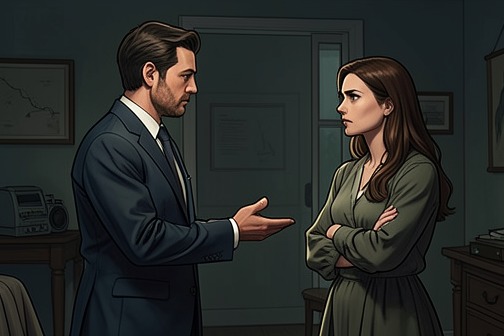
Michael’s First Marriage Proposal to [Angel](entity:character-recall-character-angel-b4ecd11d5f8e) is the first direct collision between Michael’s offer of marriage and Angel’s conviction that such promises conceal another transaction. He says he is not seeking sex and proposes taking her away as his wife; she answers with suspicion, refusing to treat his declaration as proof that her life could change.
## The Proposal
The encounter begins within the language of paid access: Angel asks what Michael wants, and he clarifies that he has not come for sex. He tells her that she will marry him and that he will take her away. Later, he makes the invitation explicit: “[Come away with me and be my wife](entity:expression-recall-expression-come-away-with-me-cc4e493935a6).” The shift is decisive, but it does not persuade Angel that she has entered a different kind of relationship.
## Angel’s Refusal
Angel is angry at what she sees as a prolonged game, hypocrisy, and lies. She insists that her work is what defines her and challenges Michael to say how he wants her to be, while urging him to be quick because his time is nearly over. His proposal sounds to her like a familiar performance: she recalls hearing similar claims from many men and dismisses the promise of a wonderful life as worthless talk. When pressed about what she expects from him, she replies, “From you? Nothing.”
## Significance and Aftermath
The proposal exposes the difference between Michael’s intention and Angel’s available understanding of it. For him, marriage is an offer of departure; for her, a man’s declaration cannot yet be separated from the exchange of money for access to her. Her accumulated experience has taught her that men may speak differently but still pay for her, whether money is left discreetly or handed to her openly. She even imagines the customer who wants the appearance of propriety—a ring left on her finger and no lantern—as another version of the same concealment. The proposal therefore begins not with trust or acceptance, but with Angel treating marriage as a possible continuation of the bargain she knows.
Event 8
Angel Beaten by Magowan
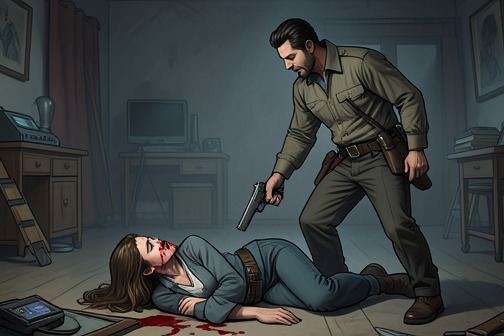
[Angel Beaten by Magowan](entity:event-recall-event-angel-magowan-b35dd0e69c93) is the violent turning point in [Angel](entity:character-recall-character-angel-b4ecd11d5f8e)’s attempt to claim her earnings and escape the Palace’s control. When she asks the [Duchess](entity:character-recall-character-duchess-9f1c6566987c) for her gold and says she wants a small house of her own, the Duchess treats the request as a challenge to her authority; [Bret Magowan](entity:character-recall-character-bret-magowan-b22aac499692) then confronts and beats Angel, reinforcing the threat behind the Palace’s claim over her labor and freedom.
## Causes and Background
Angel goes to the Duchess’s quarters, located behind the casino, and asks for her gold. The money is not merely for luxuries: she wants a little house of her own, and the thought of ordinary necessities such as eggs and cream is bound up with the freedom she hopes to gain. The Duchess responds with suspicion, asking whether Angel intends to start a business independently. Angel’s request therefore brings her economic dependence and desire to leave into direct conflict with the woman who controls her earnings.
## Confrontation and Assault
The Duchess warns Angel that a smart girl would not speak to her that way, then invokes the help she once gave Angel when she arrived in San Francisco injured and nearly starving. Though the Duchess presents this history as a debt Angel owes, the exchange makes the terms of her protection plain: gratitude is expected to mean obedience. The Duchess tells Angel to rest and promises to talk later. Instead, [Magowan](entity:character-recall-character-magowan-133b8e4fbb28) enters her room without knocking and closes the door. He says the Duchess has told him Angel has a lot to say, threatens to make her obedient, and announces that she will work that night regardless of how she feels.
## Resistance and Consequences
Angel sees the locked door and the window, and her thoughts turn to the repeated pattern of attempted escape followed by renewed captivity. Rather than submit quietly to Magowan’s threat, she laughs at him and calls him the Duchess’s pet dog. He strikes her repeatedly; after the fourth blow, she can no longer hear anything clearly. Her defiance briefly turns the encounter into an act of mockery, but it does not undo the power imbalance: Magowan’s violence enforces the Duchess’s authority, and Angel’s effort to secure money and independence is met with punishment.
## Aftermath and Significance
Later, Angel recalls that she had returned to the Palace to get her gold and hoped to buy a small cabin in the woods. Her account connects the assault to that unrealized plan and to her sense that every attempt to escape has left her worse off. She also tells Michael that she had almost succeeded in dying after Magowan’s attack. The episode thus marks more than a beating: it shows how the Palace’s control of Angel’s income narrows her choices, and how the threat of violence sustains that control.
Event 9
Angel与Michael初次圆房
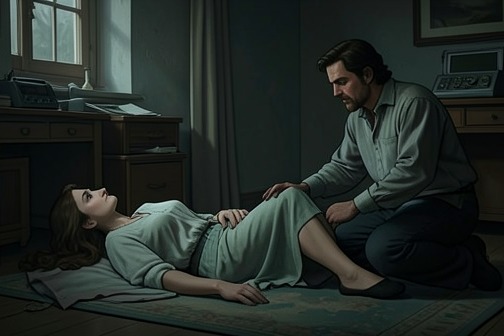
[Angel and Michael](entity:relation-recall-relation-angel-and-michael-4f93cbb0a5f5)’s first consummation is a turning point in their marriage: an encounter Michael approaches as mutual intimacy and [Angel](entity:character-recall-character-angel-b4ecd11d5f8e) initially treats as a role she knows how to perform. His insistence on attending to her rather than simply taking pleasure exposes the distance between their understandings of sex, and the unfamiliar tenderness that breaks through her defenses becomes a reason to run.
## Causes and Conflicting Ideas of Marriage
Michael has bought Angel’s freedom and married her, but the rescue has not made her feel free of the transaction. She tells him that paying the [Duchess](entity:character-recall-character-duchess-9f1c6566987c) was no different from what he had done before, and later insists that paying gold for her does not mean he owns her. Michael answers with a different account of the marriage: he made vows before [God](entity:character-recall-character-833766c1de3f), regards them as binding for life, and understands marriage as a promise to build a life together and love one another whatever comes.
Their competing expectations reach into the bedroom. When Angel asks about her wifely duties, Michael says they will consummate the marriage when sex means more to her than work. She responds by offering to do whatever he wants, language that to her belongs to the familiar exchange of sex for another person’s satisfaction. He rejects that phrasing because it reduces intimacy to the same transaction she has offered other men. His restraint is not a refusal of desire; it is an attempt to keep desire from displacing love.
## The Encounter
Michael approaches Angel gently. He takes her hand, covers her blackened palm with his, and tells her they are in this together. He acknowledges that he is as new to marriage as she is and describes it as a shared life rather than a convenient arrangement. Angel remains skeptical, drawing on what she has seen of married men and their wives, and asks why he would make such a promise knowing what she has been. Michael distinguishes her past from her present, saying that he knows what she was.
As they kiss, Angel is initially able to interpret his tentativeness as something she can manage. When they move to the marriage bed, however, she notices him shaking from his long self-imposed celibacy and feels an unexpected sympathy. She tries to shut down that response by concentrating on her money in Pair-a-Dice and the possibility of freedom, telling herself not to think or feel and to play her part. Michael recognizes that she has withdrawn inwardly and asks why she will not let him get close.
The scene turns on his attention to her. His desire does not make him stop looking for her response; when she resists his closeness, he holds her and asks her to look at him. Angel’s anger at his persistence gives way to a confused shift in feeling. She says his name, and afterward he holds her, tells her he loves her, and speaks of the pleasure he has found in her. What unsettles her is not simply that sex has occurred, but that he has treated it as an encounter between two people rather than a performance he could accept without seeing her.
## Aftermath and Significance
For Michael, the encounter deepens his confidence in the marriage and its promise. For Angel, it opens an emotion she has not welcomed: something hard and tightly closed begins to soften, and the old warning to escape rises in response. The intimacy therefore does not resolve their conflict. It makes the stakes more immediate by showing how vulnerable she feels when the defenses that once let her endure sex begin to fail.
The consummation establishes the difference between transactional sex and intimacy grounded in reciprocal attention, while refusing to present that difference as an easy cure for trauma. Michael’s restraint and tenderness do not instantly make Angel trust him; her reaction is to fear the change taking place within her. The event becomes a hinge in the marriage: a moment of closeness that simultaneously draws the couple together and intensifies Angel’s urge to flee.
Event 10
The Pair-a-Dice Palace fire and its aftermath

[The Pair-a-Dice Palace fire and its aftermath](entity:event-recall-event-pair-a-dice-palace-ba091290db16) mark the destruction of [Angel](entity:character-recall-character-angel-b4ecd11d5f8e)’s former world: the Palace is reduced to rubble, two women die, and the establishment’s collapse leaves Angel without the place and people she expected to find on returning to Pair-a-Dice.
## The Fire and a Town in Decline
When Angel reaches Pair-a-Dice, she finds the Palace gone and the streets quiet. Murphy tells her it burned down a couple of weeks earlier. The fire has occurred amid the town’s broader decline: the remaining gold is difficult to extract, businesses are leaving, and Murphy expects Pair-a-Dice to be nearly dead within a month or two. [Joseph Hochschild](entity:character-recall-character-joseph-hochschild-07f564195ba7) has already dismantled his mercantile and moved to Sacramento.
## Losses and the [Duchess](entity:character-recall-character-duchess-9f1c6566987c)’s Disappearance
Angel asks after the Duchess, hoping to locate her, but learns that she left after the fire. Murphy cannot say whether she went to Sacramento or San Francisco. He says [Bret Magowan](entity:character-recall-character-bret-magowan-b22aac499692) burned the Palace down around her, leaving her with almost nothing. Two women were trapped upstairs and died in the blaze: Mai Ling and another woman Murphy identifies only as the drunk, whose name he cannot remember.
The second woman was [Lucky](entity:character-recall-character-lucky-39578d8ec262). Angel recognizes her through Murphy’s description and privately grieves the loss of her friend. The news turns Angel’s return into an encounter with absence: the Palace has vanished, the Duchess is gone, and Lucky is dead.
## [Magowan](entity:character-recall-character-magowan-133b8e4fbb28)’s Fate and Angel’s Immediate Situation
Murphy reports that Bret Magowan tried to escape after the fire, but was caught about five miles away, brought back, and hanged on Main Street. Angel leaves the bar to sit alone and regain control of her emotions. Murphy then offers her a room and proposes that she return to business with him, making clear that he expects to negotiate a share of her earnings.
The fire thus changes the conditions Angel encounters on her return rather than restoring the past she had come back to find. Her former workplace and friend are gone, while Murphy presents renewed work in prostitution as an immediate option. The episode combines the destruction of a place with the loss of a personal refuge, against the larger decline of Pair-a-Dice.
Event 11
Angel在Murphy手下重操性交易
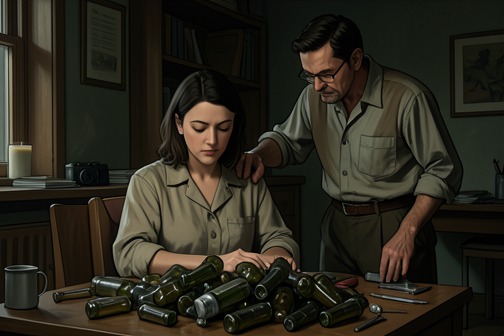
[Angel](entity:character-recall-character-angel-b4ecd11d5f8e)’s return to prostitution under Murphy follows the collapse of the future she had tried to build away from it. With Pair-a-Dice dying, the Palace gone, and her savings and belongings lost, she accepts Murphy’s offer of shelter and work on terms she partly negotiates but cannot make free of exploitation. The episode exposes how poverty and the loss of other options turn a nominal bargain into a constrained return.
## Causes and Background
Pair-a-Dice is already failing as the gold becomes harder to extract. Murphy tells Angel that the town may be finished within a month or two and that he will have to follow new strikes. The [Duchess](entity:character-recall-character-duchess-9f1c6566987c) has left after the fire, and Angel’s plans collapse with the news. The fire has also killed two of the Palace’s girls.
Angel has nowhere to go and little to fall back on: she has no gold, no change of clothes, no food, and no place to stay. Winter has arrived, and the cabin she had imagined buying feels unattainable. When Murphy offers her a spare room and a return to business, the proposal meets immediate material desperation rather than a genuine range of choices.
## The Bargain with Murphy
Murphy proposes a sixty-forty division in his favor, alongside room, board, and clothing. Angel counters that she will work only for an equal split, with clients paying her directly. He accepts the fifty-fifty division but adds that she must provide him with services for free because the premises are his. Angel does not contest that condition, and Murphy declares that she is staying and takes her upstairs.
The negotiation gives Angel some control over the stated share, but not over the larger structure of the arrangement. Murphy controls the room and the business, and his added demand makes clear that the improved percentage does not amount to bodily or economic independence. Angel drinks the whiskey and follows him, emotionally numb and thinking that nothing will change.
## Life Under Murphy
The return settles into a grim routine. Murphy replaces the Duchess as manager, while Max replaces [Magowan](entity:character-recall-character-magowan-133b8e4fbb28) as the more manageable guard. Angel’s room is smaller and her clothes less grand, though food is plentiful; the men remain much the same. She shuts down her emotions and mind to get through the work.
Murphy’s first encounter with Angel after the bargain is especially demanding. After he leaves, she sits alone in the dark, hugging her knees and rocking as the pain associated with [Paul](entity:character-recall-character-paul-6e5f3b48f63d)’s return to the valley overwhelms her. Her outward resumption of work therefore coexists with private distress rather than signaling recovery or acceptance.
## Motive and Significance
When Michael later asks why she went back, Angel says that she wanted her gold and a little cabin in the woods. The explanation connects her return to a concrete plan for independence, but the lost money and lack of shelter have instead placed her back in the trade. She also admits that she gave Paul sex to pay for the ride back, making the episode part of a wider pattern in which travel and survival are purchased through sexual exploitation.
The story distinguishes bargaining power from freedom: Angel can press Murphy for a better division, yet poverty, lost savings, and his control of lodging constrain what she can refuse. Her later work selling cookware for Sam Teal reveals that she can redirect skills acquired in prostitution toward other labor, but at this point the return to Murphy marks the severe limits placed on that alternative.
Event 12
Angel’s return from Pair-a-Dice
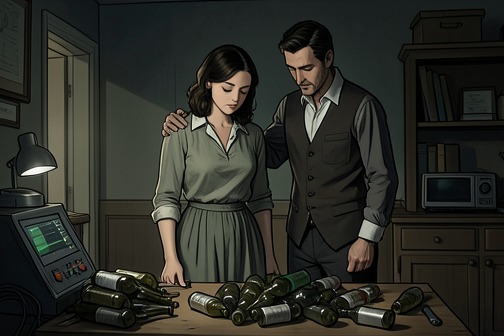
[Angel’s return from Pair-a-Dice](entity:event-recall-event-angel-s-return-from-pai-4291cb0adc3f) is a crisis of trust in which her attempt to secure money and a way home pulls her back into the transactional survival patterns she had hoped to leave. Her admission that she exchanged sex with [Paul](entity:character-recall-character-paul-6e5f3b48f63d) for the ride back, and Michael’s struggle over whether to forgive her, make the episode a turning point in their marriage; the aftermath also shows [Angel](entity:character-recall-character-angel-b4ecd11d5f8e) redirecting skills formed through prostitution toward selling cookware.
## Causes and Return
When Michael asks why she went back, Angel gives a starkly practical answer: she wanted her gold. Asked what she wanted it for, she says she hoped to have a small cabin in the woods. The wish points toward a life apart from dependence, but her means of pursuing it remain bound to money and survival.
Angel later tells Michael that she had sex with Paul to pay for the ride back. The disclosure clarifies the immediate cost of her return: transportation itself became a transaction, and Paul was part of the exchange. The episode does not reduce this choice to simple desire; it places it within the financial and emotional pressures that govern Angel’s attempts to leave and return.
## Michael’s Response
Michael’s reaction is divided. He remembers Angel’s earlier illness and what she revealed while delirious, and recalls that he had seen her hurt even when she fiercely denied it. Those memories help persuade him to go after her and bring her back, despite feeling betrayed and wondering whether he should have left her in Pair-a-Dice.
Back at the cabin, his conflict becomes concrete. He asks himself whether he can forgive her, then finds the cabin orderly, a fire burning, and breakfast prepared—but Angel is gone. In anger, he knocks the pot loose and complains that he is tired of repeatedly going after her. His decision to search again shows the strain between his exhaustion and his continuing commitment to her as his wife.
## Shame and Bargaining
After returning to the cabin, Angel handles Michael’s red wool shirt carefully, folds it, and puts it away in his drawer. She recalls Paul’s contemptuous judgment and treats her return to old behavior as proof that she can be nothing but a prostitute. That conclusion turns a particular act into a verdict on her whole identity.
Her response is to plan another bargain: she is willing to do whatever Michael wants for as long as he will let her stay. She prepares breakfast and cleans while waiting for him, but his absence leaves her uncertain whether he will return or send her away. Their reunion thus carries a stark imbalance: Michael is deciding whether he can forgive, while Angel fears that continued shelter may depend on making herself useful to him.
## Work and Meaning
The episode’s economic pattern continues beyond the journey. Later, Angel helps Sam Teal sell cast-iron pans to miners, drawing their attention with talk of cooking and the pan’s usefulness for protecting a claim. The men crowd forward, and a fight breaks out as they compete to buy. Angel then negotiates a price above Sam’s stated cost, demonstrating that she can read an audience and shape a sale.
She recognizes that selling a frying pan is not so different from selling herself: both call on skills she learned in a world where income and survival depended on persuasion. But the distinction matters. In this scene she sells merchandise, and Sam gives her a share of the proceeds. The contrast reveals both the persistence of her commercially honed abilities and the possibility of using them in work that does not trade on her body.
Event 13
Angel’s crisis and reconciliation with Michael
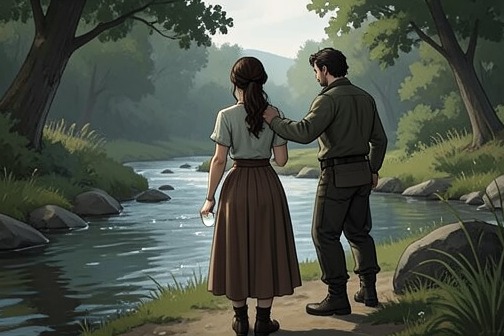
[Angel’s crisis and reconciliation with Michael](entity:event-recall-event-angel-s-crisis-and-reco-691aebc25435) is the turning point in which her attempt to escape shame becomes a disclosure of the childhood trauma beneath it. After returning to prostitution, she sees Michael weeping and recognizes the harm she believes she has caused; her effort to wash away her past gives way to a painful account of rejection, exploitation, and grief. Michael answers not by abandoning their marriage but by asking her to trust him, one day at a time.
## Causes of the Crisis
[Angel](entity:character-recall-character-angel-b4ecd11d5f8e)’s return to Pair-a-Dice and her betrayal of Michael have left her convinced that she has destroyed the chance he offered her. When she finds him weeping in the barn, the sight deepens rather than relieves her distress: she retraces the choices that, in her view, led her away from him and back to prostitution. She treats her past not as a sequence of harms done to her, but as proof that she is at fault and cannot belong in his home.
That conviction takes physical form in an attempt to wash herself clean. Angel runs to a creek with soap, believing she can remove the shame she associates with everything that has happened to her. Michael intervenes and tells her that hurting herself will not make her clean. The failed washing becomes the crisis’s central image: her body cannot undo the past, and neither can self-punishment.
## Disclosure and Reframing
Once back inside, Angel explains why she cannot accept Michael’s reassurance. Her mother was rejected by her parents and church because she had an illegitimate child; the family ended up on the docks, where her mother turned to prostitution and died when Angel was eight. Angel then reveals that [Rab](entity:character-recall-character-rab-1eed0d979385) sold her to a brothel and that [Duke](entity:character-recall-character-duke-3caca367e857) exploited her as a child. She presents these events as part of a life she believes she was destined to lead, and insists that what happened has become inseparable from who she is. Michael’s question—whether she blames herself for all of it—brings that self-condemnation into focus. She also recounts that Rab was killed in front of her after handing her over.
## Reconciliation and Meaning
Angel rejects Michael’s effort to call her by the name he believes is hers, insisting that the past cannot be separated from her identity. She argues that she cannot make herself clean by denying what happened, and asks him to take her back rather than keep her as his wife. Michael refuses. He tells her he will not take her back and affirms that they belong together, then makes clear that staying is her choice: she can decide to trust him, one day at a time. Angel nods and accepts the possibility of trying his way. When she clutches his shirt and rests against him, her body finally relaxes in his embrace. Michael’s understanding shifts as well: he sees not only the woman he loves and feels betrayed by, but the wounded child she once was. Their reconciliation does not erase her history; it begins with his commitment to remain beside her and her tentative decision to trust him.
Event 14
The Altmans settle in the valley
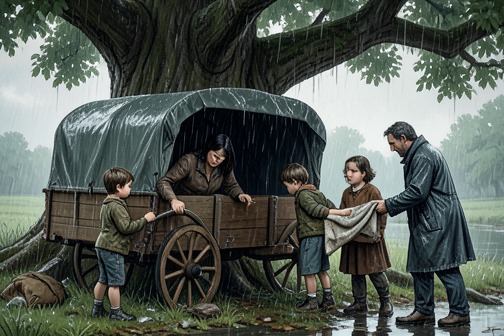
[The Altmans settle in the valley](entity:event-recall-event-the-altmans-settle-in-t-5643113ccea0) after [Michael Hosea](entity:character-recall-character-michael-hosea-4fe314cd3a46) and [Angel](entity:character-recall-character-angel-b4ecd11d5f8e) find them stranded on a rainy road, an encounter that transforms temporary shelter into a new family foothold in the region. Michael gives the family his cabin for the winter, then helps [John Altman](entity:character-recall-character-john-altman-7c60f949a5eb) establish a separate home; the settlement expands the valley community and brings Angel into closer connection with the Altmans, even as her fear of intimacy makes that welcome difficult to accept.
## The roadside encounter
Five miles along the road, Michael and Angel came upon a broken-down covered wagon. John and [Elizabeth Altman](entity:character-recall-character-elizabeth-altman-6e95c4eac59b) were struggling to fit a repaired wheel, while their dark-haired daughter Miriam sheltered four younger children beneath a large oak. Michael stopped and sent Angel to bring the children to the wagon, offering them a dry place and another blanket.
John explained that the wagon would carry them only a short distance. He accepted Michael’s invitation to spend the winter at his farm, with the family intending to continue to [Oregon](entity:location-recall-location-oregon-c068cd7d4a38) in spring. Elizabeth’s relief at the offer made plain how precarious their journey had become; John told Angel that he had nearly been overcome before Michael arrived.
## Shelter and a home of their own
The invitation immediately required sacrifice from Michael and Angel. Michael said the Altmans could have the cabin, leaving the couple to sleep in the barn. Angel questioned why the family could not take the barn instead, but Michael pointed to Elizabeth’s illness and the family’s having gone more than nine months without a house. He also saw the possibility of a lasting arrangement: a good strip of land bordered [Paul](entity:character-recall-character-paul-6e5f3b48f63d)’s property, and he hoped the Altmans might stay in the valley as another family in the community.
That hope became a plan to give John land and a home. When John later showed Miriam the soil, she smelled it and declared it rich enough to eat; she was delighted by the prospect of settling there, while her father told her not to tell Elizabeth until a cabin had been built for her. By the time the wagon brought Elizabeth to the new cabin, she stared in disbelief, then wept and embraced John. Her relief and affection closed the distance between the family’s uncertain arrival and their new beginning.
## Angel and the new family
Michael imagined the Altmans’ presence might give Angel women friends. Angel, however, wondered what she could have in common with them, and the prospect of sharing her home with nine people initially left her stunned. Her resistance reflects how unfamiliar ordinary domestic welcome remains to her, even as her actions complicate that distance: she helps the children into the wagon and gives Michael the spare blanket when he returns soaked from assisting the family.
The Altmans’ arrival also deepens Angel’s attachments. After leaving the Hoseas’ household, she becomes anxious about Elizabeth’s reaction to the new home and privately fears losing Miriam and the other children. When she later has to leave Michael, she entrusts his mother’s wedding ring to Miriam and asks her to return it to him. The ring turns their friendship into a bond of confidence at the moment Angel is separating herself from the family she has come to love.
## Settlement and its wider significance
The family’s settlement belongs to a wider pattern of movement between hardship and rebuilding. When Angel later reaches San Francisco, she sees a city rebuilt after fire and flood, with frame and brick structures replacing burned or swept-away buildings. The expanding city includes new businesses and a public school, where watching children play reminds her of Miriam, Ruth, and the boys she misses. Against that urban scene of repeated destruction and reconstruction, the Altmans’ cabin represents a more intimate form of renewal: land, shelter, and a family able to imagine remaining together.
The episode also marks a change in the valley itself. Michael’s response to travelers in need does more than rescue one family from a broken wagon; by offering winter shelter and helping John establish a home, he makes settlement possible. For Angel, the Altmans embody both the warmth of friendship and the risk of becoming attached to people she may lose, so their arrival opens a door toward belonging without erasing her fear of it.
Event 15
Angel confesses her past to Michael
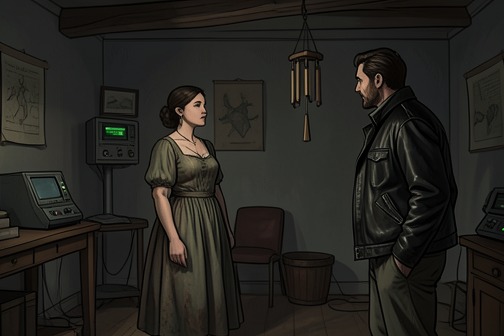
[Angel](entity:character-recall-character-angel-b4ecd11d5f8e)’s confession to Michael brings the history she has used as a defense into their marriage: she tells him that her father resumed a sexual relationship with her when she was sixteen, and that she cannot have children after [Duke](entity:character-recall-character-duke-3caca367e857) arranged for her pregnancies to be terminated and ensured she would never become pregnant again. She intends the truth to drive Michael away. Instead, he remains, renews his vows, and makes her a set of wind chimes; yet Angel leaves the next morning, convinced that her infertility makes her an obstacle to the family he wants.
## The Confession and Its Purpose
By the time Angel decides to tell Michael everything, her feelings for him have begun to grow despite her efforts to suppress them. The intimacy feels dangerous to her: she believes that revealing the worst of her past will poison their bond and make her safe from further attachment. Her confession is therefore not simply disclosure but a deliberate attempt to end the hope that has begun to take root.
She tells Michael that she had sex with her father. He had left her life when she was about three and returned when she was sixteen. She also recounts telling him who she was and what had happened to her mother; he wept and asked her to forgive him, but she refused. Three days later he shot himself. Angel knows that he owed money, but interprets his death through the history between them. Michael listens as she reveals the past she has kept from him, and apologizes for what was done to her, though he was not responsible for it.
## Infertility and the Weight of the Past
Angel adds that she cannot have children. She became pregnant twice, and Duke had a doctor end both pregnancies; after the second, he instructed the doctor to ensure she could never conceive again. She presents this as the fact that will make a difference to Michael, who wants children. Her disclosure links the violence she endured to the future she believes has been taken from her.
That belief later governs how she understands her place in the marriage. When Elizabeth reassures her that her time may come, Angel has already told Michael the truth; the reassurance cannot undo what she regards as permanent. At Christmas, she asks what she can give him when what he most wants is a child, and grieves that Duke ruined her chance to be like Miriam. She tells Miriam that she does not belong with Michael and that he deserves children, making her inability to conceive the reason she must leave rather than a condition they might face together.
## Michael’s Response and Renewed Vows
The revelation does not end Michael’s commitment. Later, when Angel finds him at the hill where he had taken her to watch the sunrise, she offers to leave if he wants her to. He tells her no. The scene reverses the outcome she had tried to force: the truth has not driven him away, and he continues to choose their marriage.
Michael answers her disclosure with an act of care as well as words. Angel sees that she has destroyed his dreams, while he makes her wind chimes, which she calls his private symphony. He then renews his vows, promising to love, honor, and sustain her in sickness and health, poverty and wealth, and through both difficult and good days. His promise directly resists the idea that her worth as a wife depends on bearing children.
## Departure and Significance
Their renewed closeness does not resolve Angel’s fear. The morning after Michael’s vows, he wakes to find her gone. Later, she explains her departure to Miriam as a sacrifice for Michael: she asks Miriam to love him and give him the children she cannot. She leaves while Michael’s wedding ring is in Miriam’s hand, turning her private conviction into a separation that affects them all.
The confession thus marks both a disclosure and a failed effort to control intimacy. Angel reveals the truth expecting rejection; Michael responds with steadfastness, but she continues to interpret infertility through shame and obligation. The contrast between his vows and her departure gives the episode its central tension: his promise is to remain with her, while she believes that loving him requires removing herself.
Event 16
Angel leaves Michael for Sacramento
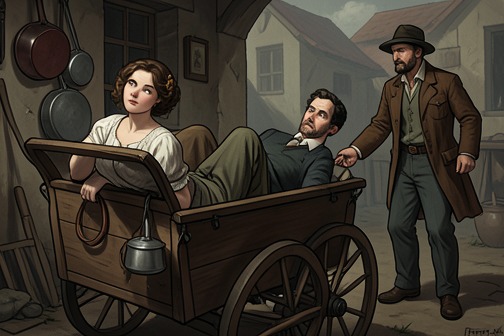
[Angel leaves Michael for Sacramento](entity:event-recall-event-angel-leaves-michael-fo-7709a4ac1297) after a night of renewed closeness, fleeing not because she feels nothing for him but because she fears that loving him will repeat her mother’s disastrous dependence on [Alex Stafford](entity:character-recall-character-alex-stafford-b937b0d19ace). The journey makes that conflict tangible: she aches for Michael while interpreting her own longing as a warning, and the work she takes up with Sam Teal briefly offers a different way to survive.
## Departure and its immediate aftermath
Michael awakens to find [Angel](entity:character-recall-character-angel-b4ecd11d5f8e) gone. She has left while he slept, carrying the memory of his wind chimes with her: the rattle of pots and pans on Sam Teal’s wagon recalls them, and she sees Michael’s face in her mind even as she tells herself not to think of him. The remembered sound binds her new journey to the marriage she is trying to leave behind.
Sam has picked her up by the roadside at dawn. He notices that she keeps looking over her shoulder and guesses she is running from her husband. Angel does not explain herself. She accepts his company and, when he offers a place to sleep in his wagon, lies down exhausted, though sleep eludes her. She knows Michael will be angry and will not understand why she left; at the same time, something in her urges her to go back and tell him what she feels.
## Fear of repeating the past
Angel’s reasoning turns on her mother’s history with Alex Stafford. She remembers how her mother poured out her feelings and professed her love, only to have that love end in humiliation and loss of pride. The comparison becomes a defense against the intimacy Angel has just experienced: being with Michael made her feel complete rather than empty, and his arms seemed like the place where she belonged, but she takes the resemblance to her mother’s love as evidence that the same abandonment may await her.
She imagines that if she went back, she would cling to Michael as her mother clung to Alex, and that Michael would eventually tire of her. This fear persists despite the contrary force of her own attachment. Distance does not ease the pain; her mind and body continue to long for him. The departure therefore changes neither her love nor her marriage, but exposes how profoundly fear governs her ability to trust them.
## Work with Sam Teal
Sam is a struggling traveling peddler, low on food and prospects, whose stock is sold on consignment. In a mining camp, Angel hears men mock him, his horse and wagon, and his merchandise. She recognizes the hurt behind his dwindling hopes and steps out from the wagon to help, taking a frying pan and selling it to the miners.
She draws on skills formed in a very different trade. Angel understands that selling a pan depends not only on what is said but on the manner and look with which it is presented; to her, persuading a buyer resembles selling herself. She ultimately sells every pan on Sam’s wagon. The episode gives her a chance to use her practiced powers of persuasion in support of another person’s honest livelihood, rather than as part of sexual commerce.
After the sale, Sam gives Angel a leather pouch containing her share of their earnings, explaining that the pans would otherwise still be on his wagon and that she needs a grubstake. The money is a concrete, earned resource for her next move, not a reconciliation or a settled home. Sam and Angel continue toward Sacramento, with Angel still carrying the conflict that brought her onto the road.
## Arrival and significance
They reach Sacramento at noon on the second day. The city has grown from the settlement Angel passed through a year earlier into a busy, increasingly permanent-looking place, with crowded streets, new construction, shops and businesses. Sam recalls that fire came first and then a flood destroyed many buildings near the river; amid the rebuilding, he pulls his wagon up before a hardware store and says his traveling days may be over.
Angel tells him she has friends in the city but declines to name them or choose a destination. She insists she can take care of herself, and Sam leaves her to make her own way. The arrival marks a practical break from Michael without making the emotional separation complete: she has money from her labor and a city in which to begin again, yet her thoughts remain fixed on the husband she has left. Her departure is thus both an act of self-protection and a retreat from the intimacy she most desires.
Event 17
Angel’s first departure from Michael
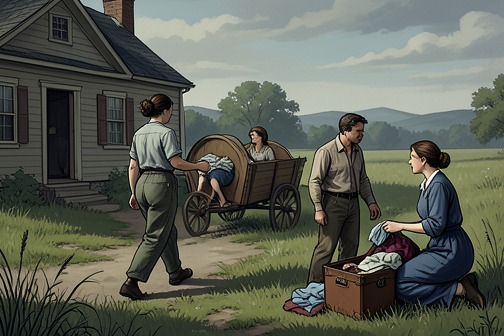
[Angel’s first departure from Michael](entity:event-recall-event-angel-s-first-departure-300120ceeba6) takes her from the relative security of their marriage to Sacramento, where she tries to support herself rather than risk the hope that life with him has begun to awaken. The separation does not last: Michael finds her, and after she admits that hope frightens her, they leave together at first light. Her return is a tentative turn toward trust, not the end of her fear.
## Causes and Background
[Angel](entity:character-recall-character-angel-b4ecd11d5f8e)’s departure grows from a conflict between her attachment to Michael and her expectation that happiness cannot endure. While working away from him, she tells [Meribah](entity:character-recall-character-meribah-3d71c6990361) that she intends to leave before he arrives. Asked whether the work has made her unhappy, Angel says she cannot stay because her experience with Michael has been too wonderful to last. She names San Francisco as her possible destination, but says she does not know where she will go.
The roots of this mistrust reach back to the early marriage. Michael’s biblical account of a prophet who remained committed to a repeatedly unfaithful wife makes Angel defensive; she responds with sarcasm and asks him to state his point. He tells her that one day she will have to make a choice. Their differing ways of approaching love sharpen the strain: Michael sees their marriage through a religious conviction that calls him to patience, while Angel has learned to interpret intimacy as a transaction and struggles to believe she can remain with him.
## Departure and Work
Angel’s plan is to leave before Michael can reach her. When he appears in the open doorway, road-worn and grim, she freezes. He explains that Joseph sent word of her whereabouts and says he has come to take her home. His arrival turns her intended private escape into a direct confrontation with the possibility of returning.
Although Michael closes the store and tells her they will go home in the morning, Angel gathers her belongings and insists she is going to San Francisco. Her actions preserve the separation she has planned even as his presence makes clear that he has come for her. The exchange ends not with immediate agreement, but with her fear and his determination sharing the same room.
## Work and Independence
The evidence around the separation connects Angel’s attempt to leave Michael with the limited kinds of work available to her. Earlier, she understands men’s payments as the price of access to her, and she suspects Michael may be treating marriage as another purchase. When she says he has got his money’s worth, she voices that suspicion directly. Her departure therefore reflects not only fear of intimacy but also a learned expectation that dependence carries a cost.
In Sacramento, Angel supports herself by selling pans for Sam Teal at a mining camp. On the journey back with Michael, she recounts the work in detail. She tells him that she had not thought she could be good at anything; Michael responds by offering her a role handling business with Joseph when they next bring in produce. The exchange gives her competence and practical work a place in the relationship, rather than reducing the choice to whether she will accept his protection.
## Return and Significance
Before leaving together, Angel tells Michael that he makes her hope, and that she does not know whether this is good. He reassures her, recognizing the admission as a beginning. At first light they set out, Angel riding behind him with her hands tucked into his belt. Their conversation turns to her route to Sacramento and her work for Sam Teal; she laughs as she describes selling the pans, and Michael laughs with her.
The episode reverses the expected direction of her escape: the woman who had meant to leave before Michael arrived ultimately travels home with him. Yet the return remains cautious. Angel’s admission does not erase her fear that good things cannot last; it marks a small willingness to let hope exist. The work she has done away from the marriage also becomes part of their shared future, as Michael offers her responsibility in the farm’s business.
Event 18
Angel与Michael重归于好
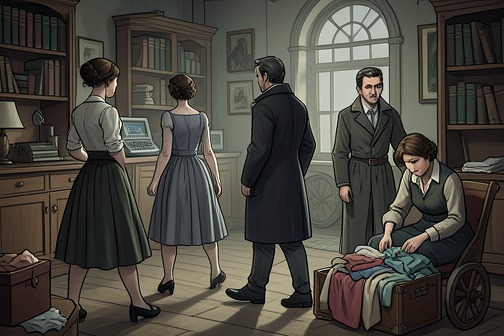
[Angel and Michael](entity:relation-recall-relation-angel-and-michael-4f93cbb0a5f5)’s reconciliation in Sacramento reverses the separation that followed her departure: Michael comes to bring his wife home, while [Angel](entity:character-recall-character-angel-b4ecd11d5f8e) must face the feelings she has tried to escape. Their reunion does not erase her fear, but begins to change love from a threat into a possibility she can choose.
## Michael Finds Angel
Michael arrives in Sacramento after Joseph sends word of Angel’s whereabouts. Dusty and grim, he tells her he has come to take her home. When she asks what made him so sure, he answers that he simply knew; he addresses her as Amanda, a name associated with their intimacy. Angel cannot bear the emotion his arrival stirs and pushes past him, insisting that he does not know why she left.
The exchange quickly reveals the conflict beneath her refusal. Angel says she does not want to feel this way, then tries to pack her clothes and leave for San Francisco. Michael names her love for him and asks whether she thinks she can run from it. His certainty does not immediately persuade her: she keeps trying to turn away, treating departure as a means of containing feelings she cannot control.
## A Different Kind of Love
Michael distinguishes himself from the men whose treatment has taught Angel to expect possession and harm. He tells her he is not her father, [Duke](entity:character-recall-character-duke-3caca367e857), or a customer paying for her time; he is her husband, and he takes her feelings seriously. He says that he loves her and that she is his wife. The point is not simply to claim the marriage, but to reject the transactional terms that have shaped her understanding of intimacy.
He also recalls their closeness without treating it as a debt or weapon. Michael tells Angel that he loved giving her pleasure and hearing her say his name, then describes love as something that cleanses rather than condemns and offers it as a lifeline. When he draws her into his arms again, she no longer struggles. She embraces him, acknowledging that she has missed the safety she feels with him and could not stop thinking about him.
## The Return Home
Angel does not present reconciliation as an instant end to fear. She tells Michael that he makes her hope, while admitting she does not know whether that is good. Michael welcomes this admission as a beginning. At first light they leave Sacramento together, with Angel riding behind him and holding his belt.
The journey home gives their reunion a practical dimension as well as an emotional one. Michael asks how Angel reached Sacramento, and she recounts her work selling Sam Teal’s pans at a mining camp. She laughs as she tells the story and admits she had not thought herself capable of doing anything well. Michael offers to let her handle business with Joseph on a future produce trip. Her return is therefore linked not only to renewed affection but to a growing recognition of her abilities and a place in shared work.
Event 19
Angel Leaves Michael for the Second Time
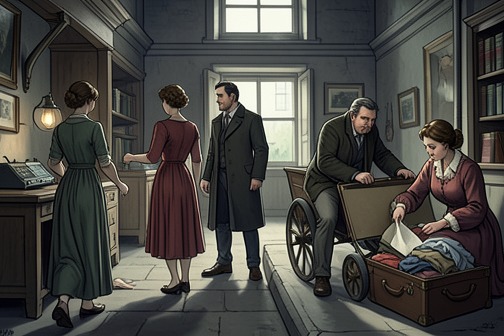
[Angel](entity:character-recall-character-angel-b4ecd11d5f8e)’s second departure from Michael turns her fear of being unworthy into a deliberate sacrifice: believing she cannot give him children, she leaves the marriage she has come to value and asks Miriam to return his mother’s ring. Michael, learning that she has gone, refuses to chase her, so the separation ends not in reconciliation but in an open choice about whether she will return.
## Causes and Decision
Angel’s departure is shaped by her conviction that she does not belong with Michael. When Miriam asks how she can leave him, Angel insists that she never belonged with him and discloses the reason she has kept to herself: she cannot have children. She believes Michael wants children and deserves them, and describes herself as having been ruined for that future long ago. Her decision is framed as being for Michael’s sake, even as it repeats the pattern of leaving rather than trusting that she can remain loved.
## The Farewell
The morning before she leaves, Angel walks with Michael to the barn as he saddles his horse and asks when he expects to return. He says he will be back as soon as he can, embraces and kisses her, and tells her that he loves her and always will. Angel takes the moment as their last, though she does not tell him she is about to go.
After Michael has left, Angel packs her carpetbag, including one of his shirts, and tells Miriam that he does not know she is leaving. She says she is leaving for good this time. Looking around the cabin once more, she acknowledges that she has been happy there but does not take that happiness as a reason to stay.
At the roadside, Angel removes Michael’s mother’s wedding ring and asks Miriam to give it back to him. Miriam will not take it at first, so Angel places it in her hand and closes her fingers around it. Before boarding the coach, Angel embraces Miriam, calls her dear to her, and asks her to be strong. As the coach starts away, Angel urges Miriam to love Michael and give him the children she believes she cannot provide.
## Consequences and Significance
Miriam runs to tell Michael that Angel has gone on the morning stage and begs him to bring her back. Michael says he will not go after her—not this time. When Miriam pleads that Angel may be lost to him if he does not act, he answers that if she wants to come back, she will, and if she does not, then she does not. His refusal marks a change from his earlier efforts to reclaim his wife: he leaves the decision to Angel rather than pursuing her again.
The wedding ring makes the departure more than a flight from the cabin; Angel returns a symbol of her marriage as she tries to free Michael for the children she thinks he should have. Yet the farewell also reveals how her sacrifice rests on an assumption about what Michael needs, while he responds by granting her the freedom to choose. Their separation remains unresolved at this point, suspended between Angel’s conviction that she must go and Michael’s willingness not to force her back.
Event 20
San Francisco Fire Destroys Harper’s Cafe
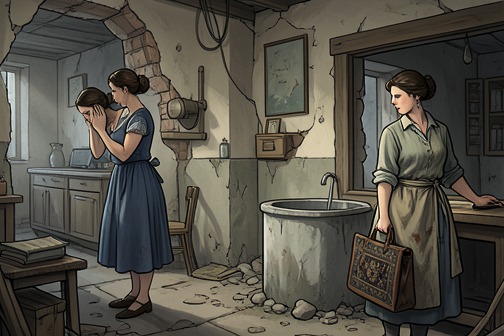
The San Francisco fire destroys Harper’s Cafe, erasing the livelihood [Angel](entity:character-recall-character-angel-b4ecd11d5f8e) and Virgil had built and leaving them exposed in the street. In the hours after the blaze, Angel turns from stunned loss to practical care for Virgil; at dawn they begin salvaging what they can. The fragile prospect of beginning again is interrupted when [Duke](entity:character-recall-character-duke-3caca367e857) appears at the water trough where she is washing her face.
## Causes and Outbreak
The fire arrives with almost no warning. Virgil bursts into the kitchen shouting that there is a fire and pulls Angel outside before she can ask what is happening. Two buildings a few doors away are already burning. A breeze then carries the flames down the block, leaving the people there scrambling to flee, direct others, and pass buckets of water in a futile effort to contain them.
## Destruction and Immediate Loss
Angel watches the cafe collapse in sparks and flame. Its business had been going well: the menu was limited, but the food was good, and word had spread. The fire leaves Angel with only the worn gingham dress and stained apron she is wearing. She realizes too late that she could have packed her belongings into her carpetbag, but she had not even thought to run upstairs and gather them.
When the breeze dies and the fire stops at the end of the street, the immediate danger gives way to the sight of a neighborhood’s losses. Goods and furniture salvaged from other buildings lie piled in the street; people stand among what remains, watching the blaze consume their hopes. Virgil sits on the ground with his head in his hands. Angel, destitute herself, sits beside him rather than leave him to grieve alone. She proposes that they search the ruins once the fire has died and suggests that the land might secure a loan for rebuilding.
## Salvage and Displacement
Angel and Virgil sleep against a pile of packs under borrowed blankets. At dawn, they dig through the ash and rubble, coughing on soot. Angel finds cast-iron pots and pans; the stove remains usable, and although the utensils have melted, many dishes can be cleaned and used again. Their recovery is painstaking and incomplete, but Virgil is less hopeless, even though he has not found them a place to stay.
They continue clearing charred wood and collecting broken glass. Virgil expects they will have to camp at the site until he can raise money to rebuild. He says a priest has space at the church and points Angel toward a soup kitchen, but she refuses the shelter and says she is not hungry, concealing her need. Her reluctance to seek help from the church shapes the immediate aftermath as sharply as the material loss: she must manage hunger, exhaustion, and exposure while insisting on her own terms.
## Duke’s Return
While washing her face from a trough, Angel hears a familiar voice greet her. She raises her head to find Duke standing before her with a deadly smile. The encounter turns the fire’s aftermath into a new threat. The blaze has stripped away the cafe, her possessions, and the livelihood that had given her a foothold in San Francisco; Duke’s unexpected arrival places her vulnerability in the path of the man from whom she has a history of abuse.
Event 21
Duke Finds and Takes Angel from San Francisco
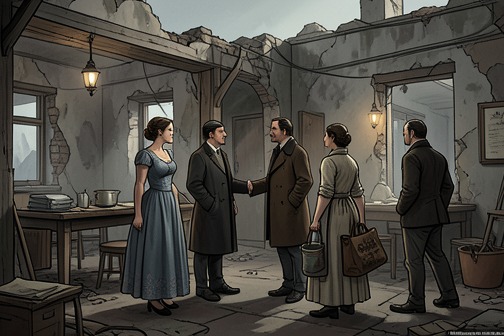
[Duke Finds and Takes Angel from San Francisco](entity:event-recall-event-duke-angel-fdc6cbf599fb) is the turning point in [Angel](entity:character-recall-character-angel-b4ecd11d5f8e)’s brief effort to build a life apart from prostitution. After finding her among the ruins of San Francisco, [Duke](entity:character-recall-character-duke-3caca367e857) identifies her as his possession and takes her back into his world, overriding her work as a cook and the protection offered by Virgil.
## Causes and Background
Angel’s return to San Francisco follows years of treating intimacy as a transaction. She has learned that men pay for access to her, and she initially interprets [Michael Hosea](entity:character-recall-character-michael-hosea-4fe314cd3a46)’s marriage proposal through the same logic, imagining that he wants the appearance of respectability without confronting her past. Later, after leaving Michael and returning to prostitution, she is recruited by Murphy to work at his establishment. Angel insists on a fifty-fifty split with clients paying her directly, but Murphy’s offer still includes a personal claim on her services. Her insistence on setting terms shows a limited effort to control the conditions of work; it does not erase the pressures shaping her choices.
By the time Duke encounters her in San Francisco, Angel has been working as a cook for Harper’s Cafe rather than returning to prostitution. The city’s fire has left its buildings burned out, and she is present among the people working through the destruction. Duke’s reappearance collapses the distance she has tried to establish between her former life and this new occupation.
## The Encounter
Duke greets Angel while she is washing her face at a water trough. She initially identifies herself as a cook, but he mocks the idea and contrasts her with the life he assumes she belongs to. When he notices Virgil among the workers, Duke disparages him as a weakling. Angel recognizes that Duke’s attention may put Virgil at risk and tries to redirect the conversation.
Duke then takes Angel by the arm and announces that she is coming back where she belongs. Virgil challenges him, saying that Angel should not have to go if she does not want to. Angel is moved by Virgil’s willingness to defend her, but Duke’s grip makes her fear what he might do to him. She apologizes to Virgil and leaves with Duke, a choice made under pressure rather than a free return.
## Return to Duke’s Control
Duke leads Angel away while she thinks of Michael, who is absent and cannot intervene. He takes her into a large gaming house, where she is recognized as his wife, and questions whether her marriage was genuine or merely a pretense. The setting reasserts Duke’s wealth and authority, while the men who greet him stare at Angel as she passes.
On the way to her assigned room, Angel remembers the corridor where Duke had first taken her in [New England](entity:location-recall-location-new-england-ef140e738f2b). That memory links the present abduction to the earlier violence of her childhood. Duke dismisses her defiance, declares that she is home, and treats her fear as something he can read and control. The scene ends with Angel back inside the system she had escaped, facing renewed confinement rather than a secure return to her former life.
## Consequences and Significance
The event reverses the apparent promise of Angel’s work in San Francisco: she had been able to call herself a cook, and Virgil had treated her as someone worth defending, but Duke’s arrival turns that fragile independence into forced departure. Her concern for Virgil also shows how Duke’s power reaches beyond Angel herself; even resistance risks consequences for those who help her.
The episode echoes earlier patterns in which men and institutions define Angel through possession, payment, or assigned identity. Yet the contrast between her work at Harper’s Cafe and Duke’s insistence that she belongs to him makes clear that another kind of life has become imaginable. His capture of her is therefore both a return to coercion and a measure of the change she has already begun to make.
Event 22
Founding of the House of Magdalena
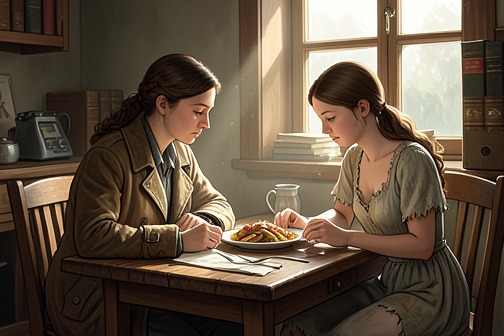
The founding of the [House of Magdalena](entity:location-recall-location-house-of-magdalena-08be4c19b61e) is the moment [Angel](entity:character-recall-character-angel-b4ecd11d5f8e) turns her own history of exploitation into a practical means of escape for other women. After meeting [Torie](entity:character-recall-character-torie-3382a67775df), a young prostitute without a way out, Angel resolves to build a refuge where women can find safety and learn work that does not require them to sell their bodies.
## From Recognition to Purpose
Angel’s idea takes shape over lunch with Torie at [Virgil Harper](entity:character-recall-character-virgil-harper-983e26fab335)’s Cafe. Torie is dejected and hopeless, and Angel recognizes in her the despair she herself had known for years. Virgil is willing to let Torie stay and work with Angel for several weeks, but Torie cannot yet cook; teaching her a trade offers an immediate, concrete path beyond prostitution.
The encounter gives Angel a sudden sense of direction. She stops Torie in the street and invites her to lunch, then returns to the Axle household eager to explain what she has understood. Her purpose is not simply to find Torie one job: she wants to establish a place where women can learn cooking, sewing, hatmaking, or another skill that will allow them to support themselves.
## Support and the House
Angel asks [Jonathan Axle](entity:character-recall-character-jonathan-axle-309d0c6c5903) for help, acknowledging that she has already received much from him and asking for more. The house she has in mind is a few blocks from the docks, and she tells him its price. Jonathan recognizes the scale of the expense, but the hope and purpose in Angel’s expression persuade him to act: he promises they will see to the matter the next morning. [Susanna Axle](entity:character-recall-character-susanna-axle-194fd259c1f4) adds that her father has friends who can help support the house.
The project therefore rests on more than Angel’s resolve. Jonathan’s financial and social connections, and the support Susanna anticipates from his friends, give the proposed refuge a material basis. Angel’s plan is presented as sustained work—providing a safe place and teaching skills—rather than a single rescue.
## The House in Practice
The House of Magdalena later appears as a place of instruction as well as shelter. When [Paul](entity:character-recall-character-paul-6e5f3b48f63d) visits looking for Angel, he encounters women and a classroom setting: arithmetic problems are written on a board, and books and papers lie across Angel’s office desk. The orderly, almost austere surroundings contrast with his expectation of a brothel and prompt him to wonder what kind of classes are being conducted there.
The contrast makes visible what Angel’s founding purpose has become. The women are not gathered only to be protected; they are being taught and prepared for other work. In that sense, the house answers the material problem at the center of Torie’s story: safety matters, but lasting departure from prostitution also requires skills and a way to earn a living.
## Significance
Angel’s initiative transforms a personal recognition into an institution. Her own experience allows her to understand Torie’s hopelessness, while her response is to create practical alternatives rather than treat suffering as an individual failing. The house’s lessons, shelter, and anticipated financial backing make care an organized effort, linking compassion to the resources and labor needed for women’s independence.
Event 23
Paul and Miriam Marry
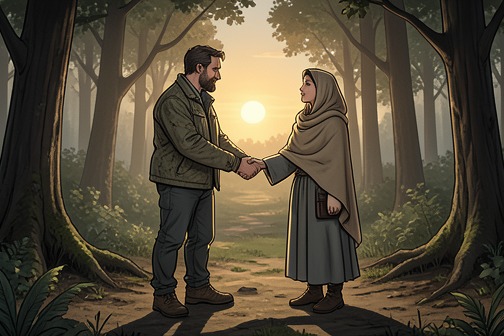
[Paul and Miriam](entity:relation-recall-relation-paul-and-miriam-37aa0e977590)’s marriage begins when Miriam takes the initiative to move into [Paul](entity:character-recall-character-paul-6e5f3b48f63d)’s cabin and openly asks to become his wife. The scene reverses their earlier separation: instead of leaving one another to longing and regret, they choose a shared life, while Miriam insists that love should be joined to marriage rather than left in the shadow of an impulsive reunion.
## Reconciliation and Decision
After months of distance, Miriam comes to Paul at daybreak with her shawl and a case, then tells him she is moving in. She invokes the biblical story of Ruth and Boaz, presenting herself as the woman who has come to Paul’s feet and asking him to answer her choice. Her boldness unsettles him; he warns that he is no saint, while she makes clear that she knows what she wants: Paul as her husband and companion for all their days.
Their embrace gives voice to feelings neither has managed to put aside. Paul admits that he thought he could leave her, but knows he would have carried her with him for the rest of his life. Miriam, even in the intensity of their reunion, asks that they begin properly. She wants marriage first, so that they can share everything without shadows or regret, and so Paul will not later feel that he took advantage of her.
## A Marriage on Miriam’s Terms
Miriam’s insistence makes the marriage more than a consequence of renewed desire. She presents herself as an adult choosing her future, not as a child being carried along by Paul’s decision. The practical path is already open: her father has spent much of the previous night trying to dissuade her, then accepted her choice and gone to find his Book of Common Prayer, intending to marry them himself.
Paul initially suggests that they ride to Sacramento to find a preacher. Miriam answers that her father will perform the ceremony. The exchange gives their union a family setting and shows that her decision is not concealed from her parents, even though it has required persuasion.
## Marriage and Its Continuing Tensions
The marriage becomes a lasting commitment, but it does not erase the difficulties in their life together. In a later conflict, Miriam objects when Paul treats the home as his alone and her as a guest who may be cast out for disagreeing with him. She insists on her right to her own thoughts and beliefs. The episode reveals that marriage does not automatically settle questions of equality, belonging, or whose voice governs a household.
Within the wider story, Paul and Miriam’s wedding stands beside [Michael Hosea](entity:character-recall-character-michael-hosea-4fe314cd3a46) and [Angel](entity:character-recall-character-angel-b4ecd11d5f8e)’s marriage as part of a recurring concern with the difference between a binding promise and a relationship shaped by fear or possession. Miriam’s decision to return, and her insistence on marrying before resuming their life together, gives reconciliation a clear form: mutual desire becomes a declared commitment, but the work of living as partners remains.
Event 24
Paul Reconciles with Angel and Invites Her Home
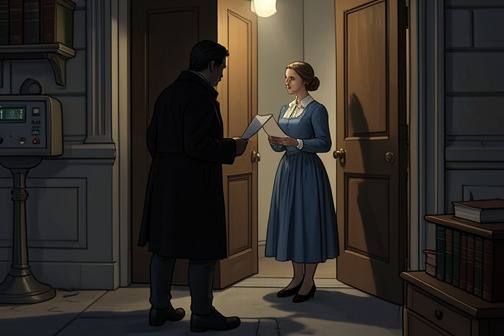
[Paul](entity:character-recall-character-paul-6e5f3b48f63d)’s reconciliation with [Angel](entity:character-recall-character-angel-b4ecd11d5f8e) in Sacramento overturns his certainty that she is a destructive presence: he comes to retrieve her for Miriam, but discovers why she left Michael and admits his own failures. The meeting ends not with Angel’s return, but with forgiveness, a changed understanding between them, and an invitation she cannot accept.
## The Search in Sacramento
Miriam sends Paul to Sacramento to find Angel, hoping to bring her home and ease Miriam’s distress. Paul initially treats the journey as a duty to his wife, while continuing to resent Angel and blame her for the disruptions in his life.
He spots a young woman whose appearance recalls his late wife, [Tessie](entity:character-recall-character-tessie-c93d3887f53d), then recognizes Angel as she crosses the street. Following her, he reaches the [House of Magdalena](entity:location-recall-location-house-of-magdalena-08be4c19b61e), where the sign confirms that she lives and works there. His discovery deepens his anger: he assumes it proves his earlier judgment of her, and worries that telling Miriam will only cause more pain.
## Recognition and Apology
At the House of Magdalena, Paul tells [Susanna Axle](entity:character-recall-character-susanna-axle-194fd259c1f4) that he is looking for Angel. When Angel appears, the encounter forces him to confront the difference between the woman he had condemned and the person Miriam had tried to make him understand. He sees that Angel’s departure from Michael was an act of sacrifice, not proof of selfishness or malice.
Paul recognizes that he had loved himself more than he had loved Miriam: unlike Angel, he had not found the courage to leave when he believed it might spare someone else pain. He also accepts that his pride and certainty helped deepen Michael’s suffering. He tells Angel he was wrong about her and asks her forgiveness. Angel says she forgave him long ago, and makes clear that she left the valley and Michael of her own free will; Paul should not take responsibility for that choice. She invites him to leave the past behind and tell her what has happened since she left.
## The Invitation and Its Limit
Paul explains that Miriam sent him and asks Angel to come home. Calling her Amanda, he means the invitation sincerely, and Angel responds with warmth; nevertheless, she tells him she cannot return. Her life now has purpose, and she does not want Paul to mistake forgiveness for a willingness to resume her former life.
Angel then explains the reason she believes she must stay away from Michael: something was done to her when she was very young to ensure she could not have children. Michael wants children, and she believes that returning would deny him that future. Paul reminds her that Michael has not given up on her, but leaves the decision to her. He gives her the name and address of his hotel and says he plans to leave the next morning, asking her to send word if she changes her mind.
## Significance
The meeting changes Paul’s understanding of both Angel and himself. He had cast her as the cause of other people’s pain; recognizing her sacrifice exposes how his own pride and refusal to understand contributed to it. Angel’s forgiveness offers reconciliation between them without erasing her agency or the reasons she has chosen not to return.
The invitation therefore remains open but unresolved. Paul can carry Miriam’s appeal to Angel, but he cannot decide for her; Angel’s explanation makes the cost of returning plain, while his recognition of Michael’s enduring commitment leaves that possibility unsettled.